FREIGHT MARKET UPDATE 2026 APRIL
Consumer Advisory : WHY BEVER
4/15/20264 min read
Why Freight Rates Are Rising in a Soft Market
If you have been watching the freight market closely, the current environment may feel unusually contradictory. Shipment volumes remain soft. Shippers are not signaling a major rebound in demand. Yet despite that, rates are beginning to move upward. Under normal market conditions, those two trends do not typically happen at the same time.
So, what is really driving the change?
The answer is simple: this is not a demand-led market shift. It is a supply-and-cost-driven correction. That distinction is critical for shippers, carriers, and logistics teams making procurement and pricing decisions right now.
Demand Still Has Not Fully Recovered
The first question most shippers ask is whether freight demand is finally returning. At this stage, the answer is not in a meaningful way.
Shipment volumes are still running below last year’s levels, and while there has been some month-over-month improvement, much of that appears tied to recovery from winter weather disruptions rather than a sustained increase in underlying freight demand.
Even near-term projections continue to point to softer year-over-year comparisons. In short, the market has not yet produced a clear demand recovery signal.
For Bever Group customers, this means rate movement should not be mistaken for a broad freight rebound.
So Why Are Rates Moving Higher?
This is where the market dynamic becomes more important. Even in a soft demand environment, transportation spend and linehaul pricing have started to edge upward. That tells us rates are beginning to move independently of volume. When pricing disconnects from demand, it almost always points to tightening supply conditions.
This tightening has been building beneath the surface for quite some time through:
Continued carrier exits
Ongoing driver availability challenges
Equipment constraints
Reduced fleet expansion
Higher operating costs
None of these pressures are entirely new. What is changing now is that these supply-side pressures are finally becoming visible in real market pricing.
At Bever Group, we are seeing this shift reflected not only in market indexes, but also in shipper bid conversations, lane coverage challenges, and earlier contract rate adjustments.
Capacity Tightening Is Now Showing Up in Execution
What was once a background trend is now beginning to affect day-to-day freight execution. One of the clearest operational signals is declining route guide performance.
In simple terms, route guide depth reflects how far down a shipper’s carrier list they must go before finding someone willing to cover the load. When this number increases, it usually means primary carriers are rejecting freight and capacity is becoming more selective. This is exactly when a market transition becomes real. It is no longer just something visible in charts or index reports—it starts impacting tender acceptance, lead times, and service reliability.
For shippers, this is where procurement strategy becomes critical.
Rising Diesel Costs Are Accelerating the Shift
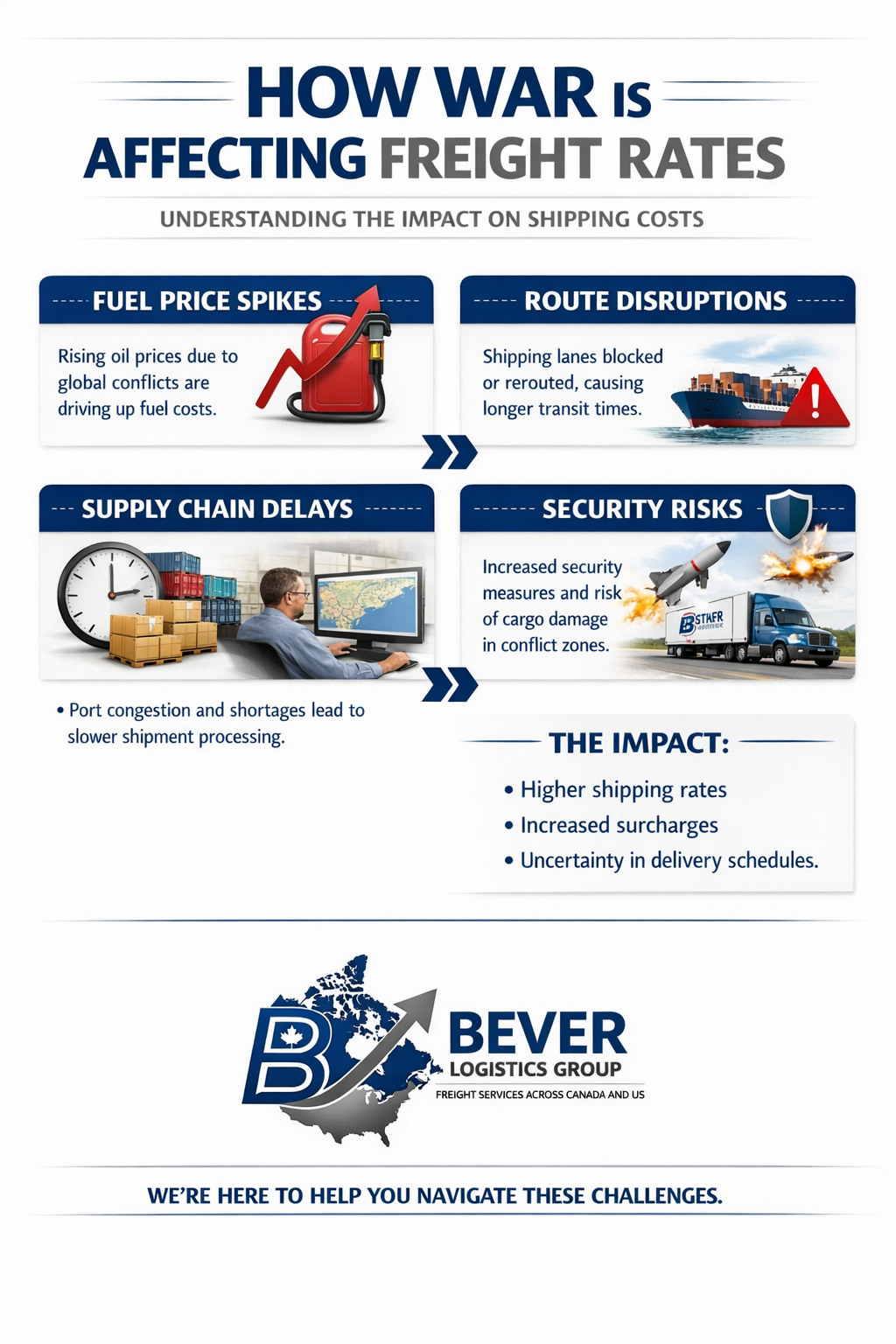
Capacity tightening alone would already put upward pressure on rates. But the more immediate accelerant right now is fuel cost escalation.
Diesel prices have risen sharply year-over-year, creating significant additional cost pressure for carriers. For trucking operations, this translates directly into higher cost per mile, tighter operating margins, and more disciplined carrier load selection.
When carriers are unable to recover these rising fuel costs, they naturally become more selective in the freight they accept. The result is an effective reduction in available capacity.
This means the market is now facing two simultaneous forces:
Tightening supply
Rising operating costs
Together, these forces can move pricing much faster than weak demand alone would suggest.
This Pressure Extends Beyond Freight
One important factor many businesses overlook is that diesel inflation affects far more than transportation.
Fuel is a major cost driver across:
Agriculture
Manufacturing
Mining
Warehousing
Distribution
Retail replenishment
As diesel rises, cost pressure spreads throughout the broader supply chain, contributing to inflation well beyond trucking.
This is why fuel trends remain one of the most important indicators Bever Group monitors when advising customers on timing and rate strategy.
The Shift Is Already Visible at the Lane Level
This is no longer theoretical.
We are already seeing earlier-than-usual rate movement in several key lanes.
For example, produce-driven Texas outbound lanes into Western Canada, including Laredo to Calgary, have strengthened ahead of normal seasonal timing as capacity tightens and agricultural freight demand begins to build.
Similarly, Los Angeles to Calgary reefer lanes are showing:
Earlier rate increases
Faster contract adjustments
Tighter lead times ahead of peak produce season
This creates an important decision point for shippers:
Do you secure committed rates early, or stay exposed to spot market volatility?
This decision is arriving sooner than usual in 2026.
At Bever Group, we are actively helping customers assess which lanes require early protection.
What Shippers Should Watch Next
The market currently comes down to three core forces:
Demand remains soft
Capacity is tightening
Operating costs are rising
This is not a typical freight cycle, but it is a powerful pricing setup. It explains why rates can strengthen even while overall shipment volumes remain below prior-year levels.
The risk is assuming weak demand automatically means stable pricing. That is no longer the case.
Final Market Perspective
The biggest risk in today’s freight environment is not misunderstanding the numbers—it is misunderstanding what is driving them.
On the surface, weak demand may suggest continued softness. But underneath, carrier availability is becoming tighter, fuel costs are rising, and execution risk is increasing across critical lanes. This is a market increasingly being shaped by supply discipline and cost pressure rather than demand recovery.
The companies that navigate this environment best will not simply react to current spot trends. They will make decisions based on the structural forces moving the market beneath the surface.
At Bever Group, this is exactly how we help shippers stay ahead—through lane strategy, early capacity protection, and data-driven freight planning.
Sources
Cass Freight Index® — February 2026
C.H. Robinson — March 2026 Freight Market Update
U.S. Energy Information Administration (EIA)
Jason Miller insights (March 2026)
BEVER LOGISTICS GROUP
Contact
SERVICES
OFFICE : 604-283-3505
© Copyright 2026 - BEVER LOGISTICS GROUP I
Web Design by BEVER.

Dry Van
Temperature Controlled Freight
Specialized Freight
Less-Than-Truckload (LTL)
Intermodal
Freight Management
Project Logistics
HOURS
MON - FRIDAY (06:00 am - 04:30 pm)
SATURDAY (08:00 am - 04:00 pm)
SUNDAY - (08:00 am - 04:00 pm))
PO BOX 2273 STN A,
ABBOTSFORD, BC
V2T 4X2
ADDRESS: